
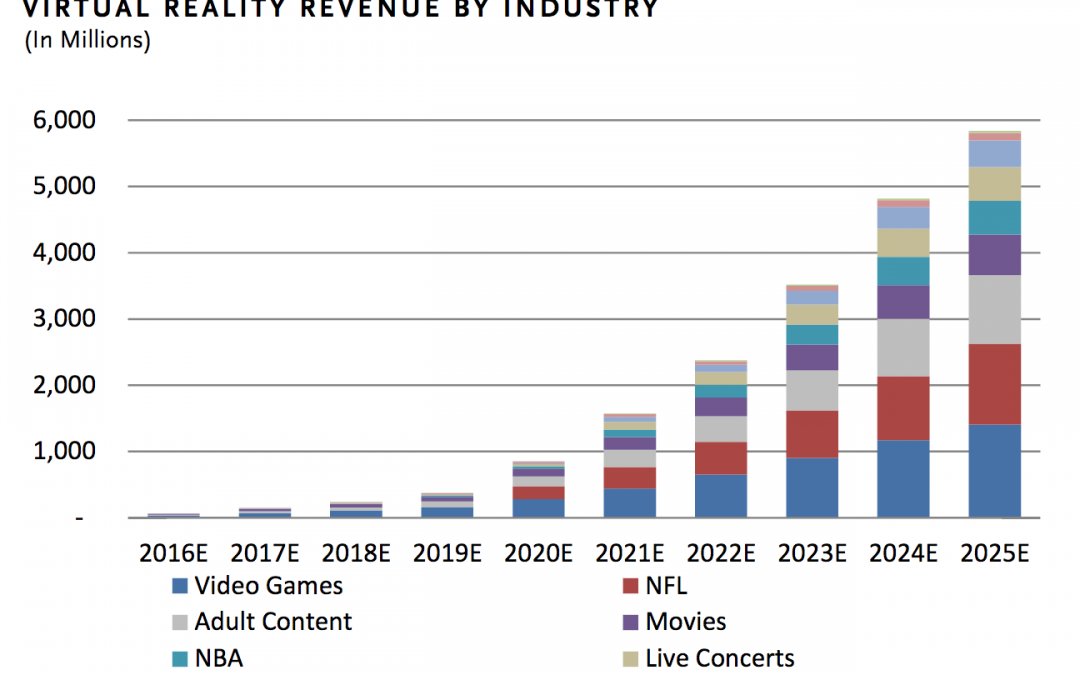
Source: Piper Jaffrey IN V E S T M E N T R E S E A R C H May 2015
Piper Jaffray does and seeks to do business with companies covered in its research reports. As a result, investors should be aware that the firm mayhave a conflict of interest that could affect the objectivity of this report. Investors should consider this report as only a single factor in making theirinvestment decisions. This report should be read in conjunction with important disclosure information, including an attestation under Regulation Analystcertification, found on pages 48 – 51 of this report or at the following site: http://www.piperjaffray.com/researchdisclosures
The Next Mega Tech Theme is Virtual Reality(VR).
We believe virtual reality and augmented reality are the next megatech themesthrough 2030.We liken the state of virtual and augmented reality today as similar to the state of mobile phones 15 years ago.It likely will take a decade before mainstream adoptionasnecessary improvements in displaysandapplications as well as lower pricing are needed to drive demand.The first phase will be virtual reality, which we believe willstart over the next several years, and is the primary focus of this report; the second phase will be augmented reality.
How VR Will be Used.
Our optimism around the theme is based on consumers’insatiable appetite for new tech experiences:virtual and augmented reality are radically new tech experiences.On the virtual side, new immersive worlds will open up,including gaming, live sports, concerts, immersive cinema and social experiences.Down the road, users will be able to virtually attend an NFL or NBA livegame with a 50-yard line seat, listento a live concert of your favorite band with a front row seat, watchmovies optimized for VR, or visit friends in far-awaylocations. Classrooms in small-town USA will be able to virtually(and relatively inexpensively) tour the Great Wall of China, Egyptian pyramids, Stonehenge, the Coliseum, or the inside of a factory or laboratory.The possibilities are endless.
Market Size.
We see market size, excluding hardware, from live sporting events, concerts, education, adult content, social experiences, movies and gaming reaching $5.4Bby 2025. While amarket size of $5.8B may seem small,this number is content only and excludes hardware, which we estimate to be $62B (500Mheadsets at a $125 ASP)in 2025.
The Winners & Losers.
We see Facebook, Google and Apple as the likely public company winners around this theme. While the private side is a bit like the Wild West, we see some of the better positioned private companies as Magic Leap, Next VR, Jaunt VR, Leap Motion, OTOY, Matterport, Linden Lab and Valve. In our view, losers include TV manufacturers, PC and mobile phone display manufacturers, the travel industry, and content companies that don’t have a VR strategy.
Risks:
The virtual reality theme is in its infancy. The two core risks are competitionand consumer appetite for VR. We estimate there are hundreds of companies competing in the space with no clear leaders. Some of those companies are powerful, with Facebook, Google and Apple entering the market at varying speeds with a collective market cap of about $1.4 trillion that will be used to gain an edge in the market. On the consumer side, it’searly.Consumers may not see value great enough to justify wearing a headset.